ICRAR’s engineering program is supported by team members with specialisations in antenna design, digital signal processing, electromagnetic compatibility and radio-frequency systems.A number of “technical astronomers” work alongside the engineers. The program is integral to ICRAR’s aim to participate in the end-to-end design, construction, data processing and science extraction for the SKA. Our broad and world-class capabilities in both radio astronomy and engineering have been demonstrated through the successful delivery of the Murchison Widefield Array (MWA) and several SKA verification systems. These engineering feats are pivotal in guiding the SKA’s low-frequency design.
Engineering Laboratory
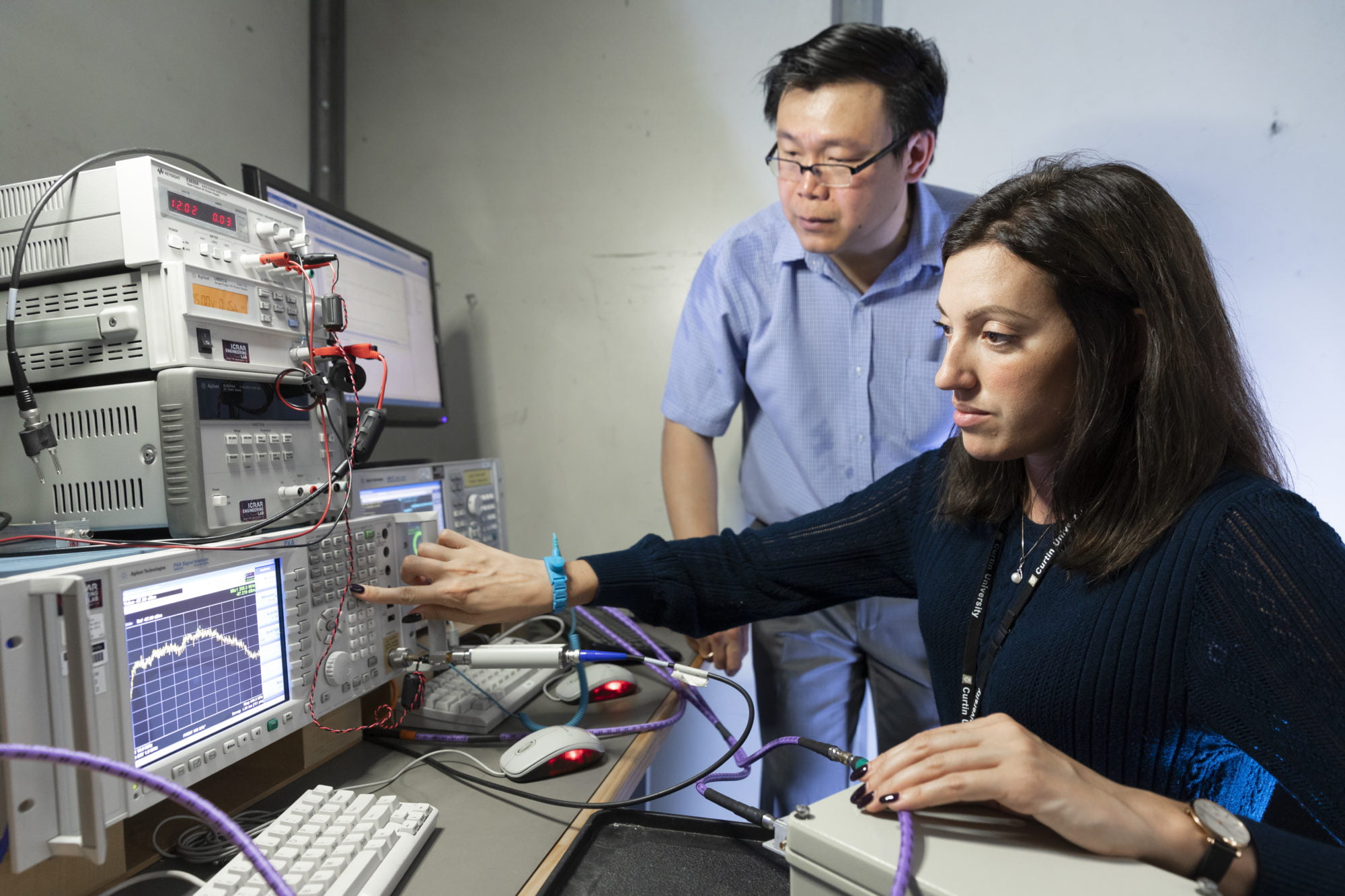
Dr Maria Kovaleva and Dr Budi Juswardy characterising a radio frequency device in our RF laboratory.
ICRAR boasts a world-class radio astronomy engineering laboratory at our Curtin University node. This $3m laboratory was established in 2009 to support Research & Development and MWA activities and has been developed progressively. The cutting-edge facilities allow engineers to build and test components before they are deployed at the Murchison Radio-astronomy Observatory, acting as an interface between ideas and the real world. The laboratory houses world-class technology in radio-frequency test and measurement equipment, antenna design systems, electromagnetic compatibility testing, and low-noise microwave engineering.
Our radio-frequency test and measurement equipment uses world-leading technology and some are the only systems of their type in Australia.
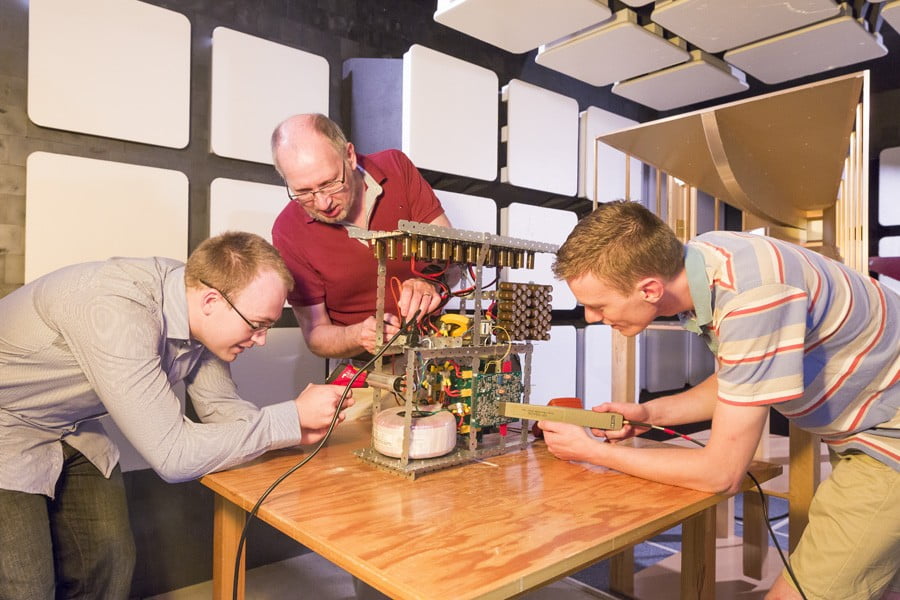
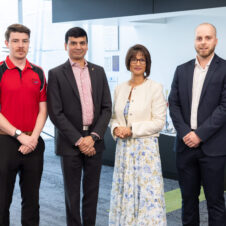
ICRAR PhD Candidate James Buchan, Lawrence Borle from ICRAR Industry partner Balance Utility Solutions and Tom van Nunen, ICRAR engineering intern from the Netherlands prepare a power supply destined for inclusion in the SKA-Low verification platform.
Case Study: GCO Electrical
Engineering Focus
ICRAR’s engineering program has broad objectives ranging from active participation in a range of SKA activities strengthening Western Australia’s engineering and research capabilities, and contributing to science and engineering community outreach and education. Our technical focus is on supporting next generation radio telescopes including MWA, ASKAP and the SKA, and includes:
- Antenna design;
- Radio-frequency engineering;
- Electromagnetic Compatibility;
- High-performance computing;
- Digital systems; and
- Software engineering.
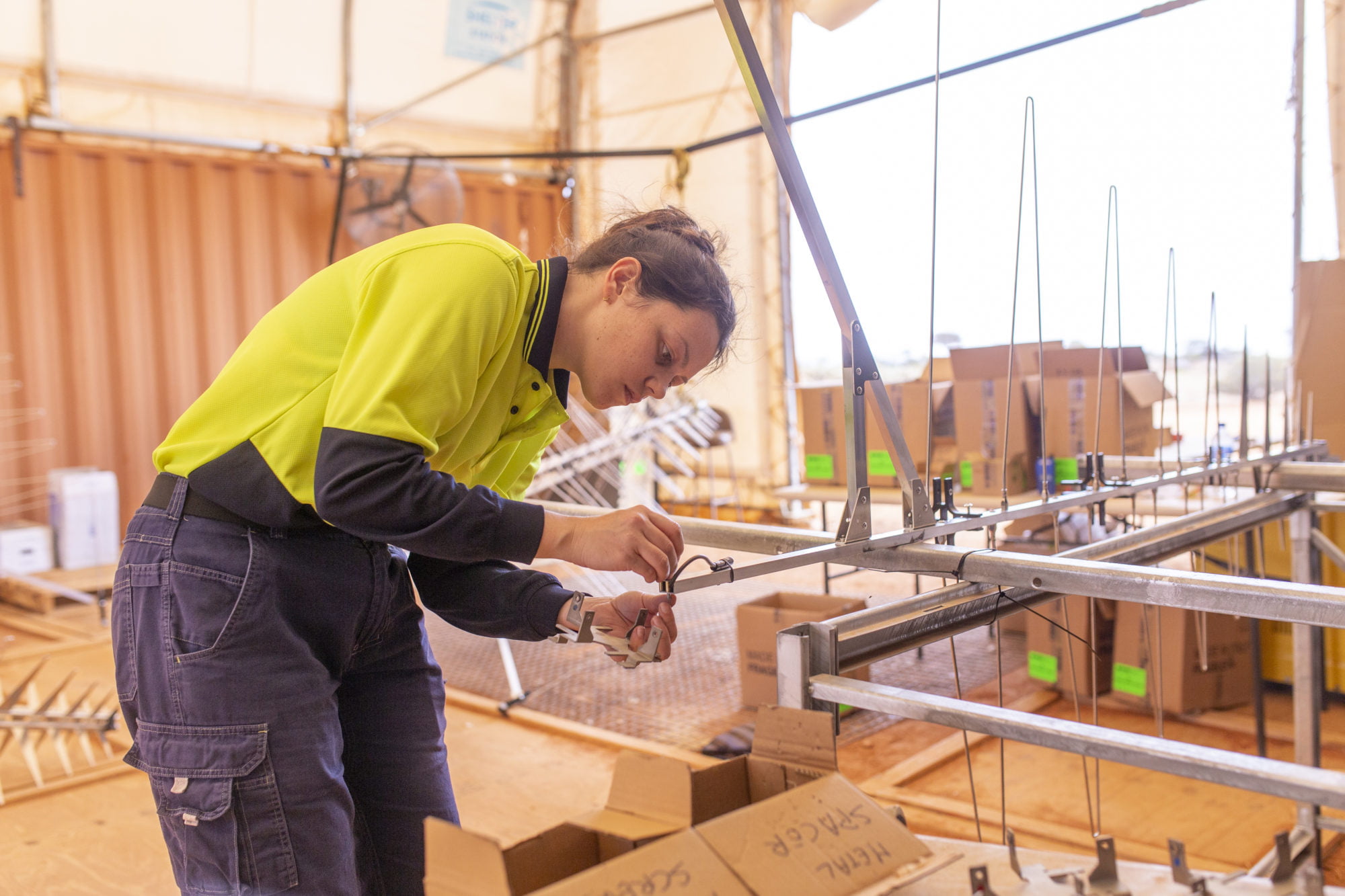
Project Officer Mia Walker assembling SKALA 4.1 antennas ready for the Aperture Array Verification System station. Credit: ICRAR/Curtin
Landmark achievements of the program to date include the successful delivery and operation of the MWA, the deployment of several verification systems for the low-frequency component of the SKA, and development of a new method for detecting fast radio transients.
After the successful commissioning of the MWA, ICRAR played a leading role in the SKA Aperture Array Design and Construction Consortium and the Signal Processing Consortium and continues to play a key role in much of the low-frequency engineering and signal processing work for the SKA.
Our engineering focus is on two key projects that contribute directly to the SKA design, verification and construction. These are:
- Astronomical Instrumentation and Signal Processing
- Radio-Frequency Front-Ends
Astronomical Instrumentation and Signal Processing
This project builds on ICRAR II success in the development of hardware and software systems for astrophysics-focussed radio astronomy systems. It adds new scope with support for an EoR Global Signal science program, and RFI mitigation program. This project continues to support SKA1-Low verification and commissioning by contributing to data collection, analysis and interpretation from the SKA-Low prototypes as part of the larger international working group. This activity is working closely with the other ICRAR engineering project, which includes detailed understanding of the antenna systems.
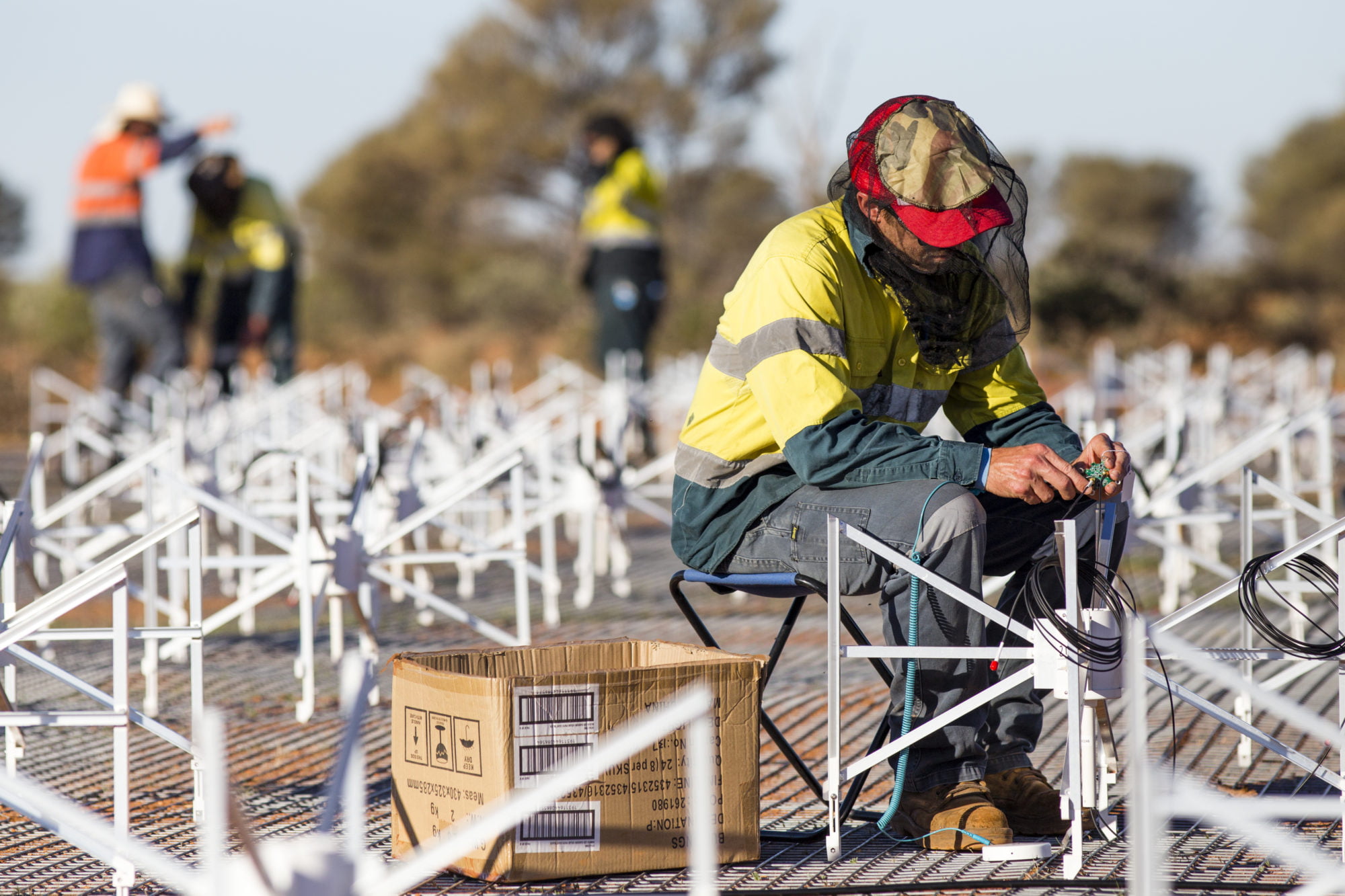
Construction of the EDA2 Credit: ICRAR/Curtin
Radio-Frequency Front-Ends
This project builds on ICRAR II success in the prototyping, validation and verification of SKA-Low demonstrator arrays. The highest priority of this project is to support SKA1-Low by providing simulation, measurement, analysis and by developing tools to characterise key performance parameters of a low-frequency aperture array. The project collaborates closely with the other engineering project in ensuring that radio astronomy instrumentation effects are well understood and the results and tools are clearly documented and efficiently implemented.
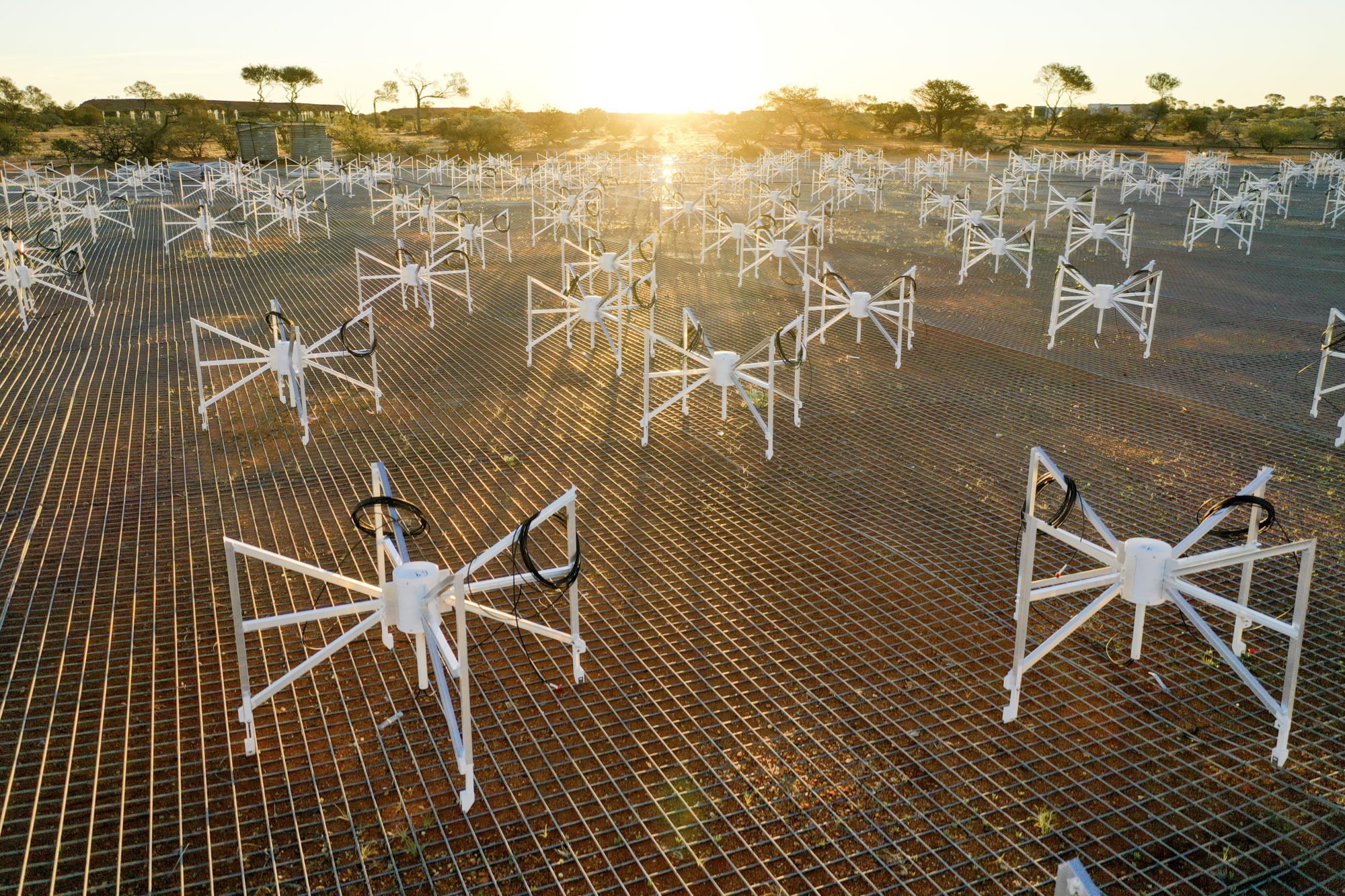
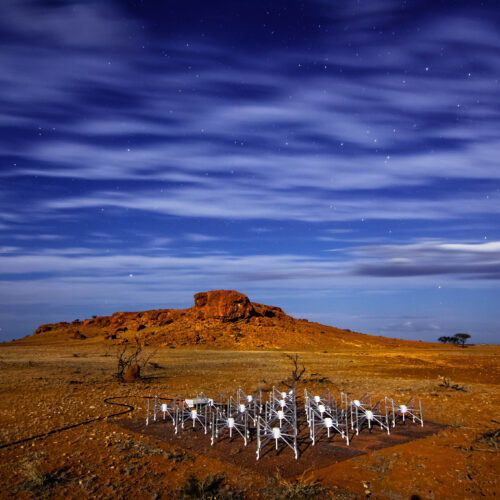
Aerial Views of the Engineering Development Array. Credit: ICRAR/Curtin

The antennas of AAVS1.5 on site at the Murchison Radio-astronomy Observatory (MRO). Credit: INAF/ICRAR-Curtin
The Engineering Team
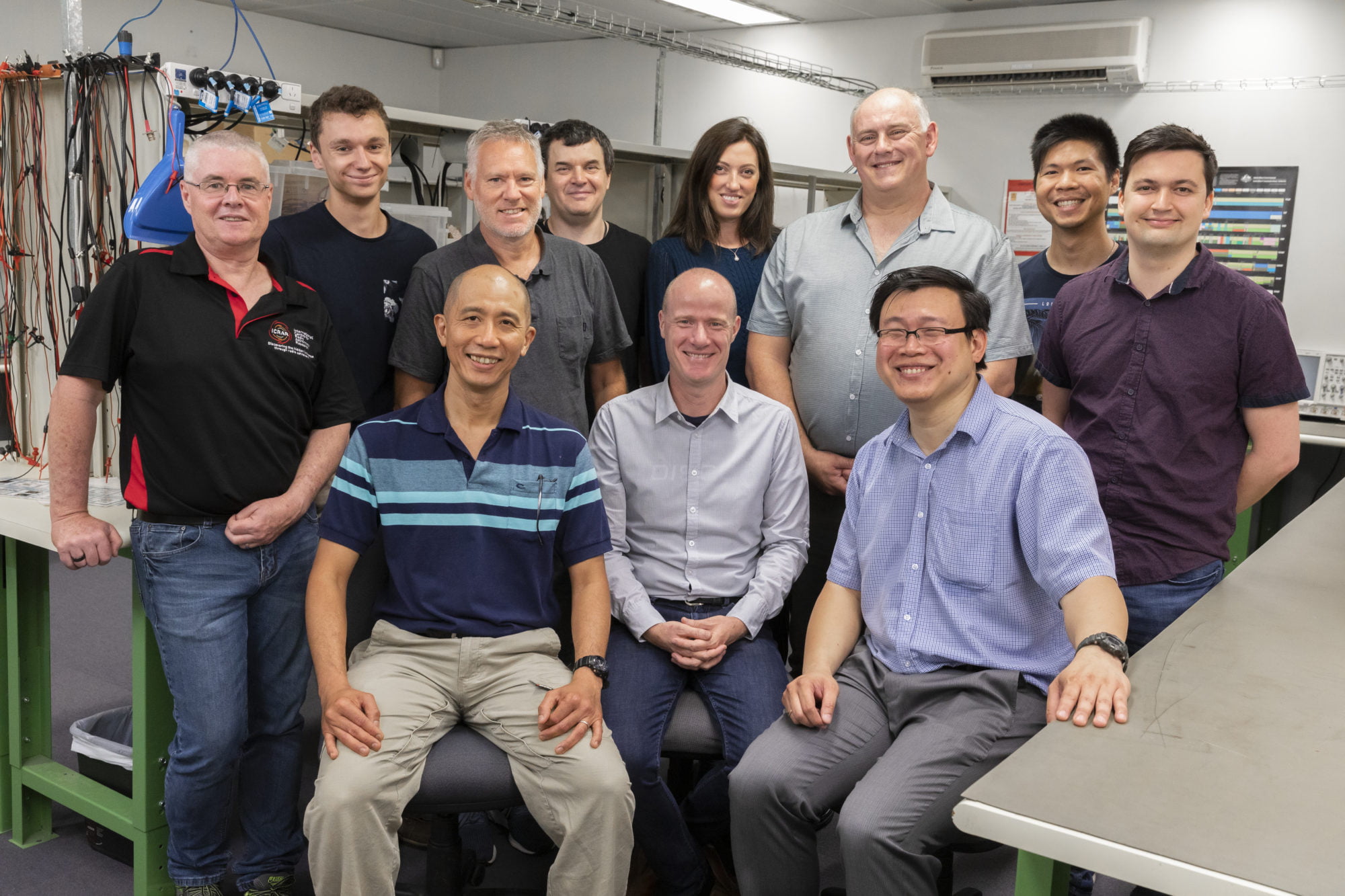
Back row: Dave Kenny, Ulrich Kiefner (visiting intern), Ian Morrison, Marcin Sokolowski, Maria Kovaleva, David Davidson, Daniel Ung, Jake Jones. Front row: Adrian Sutinjo, Randall Wayth, Budi Juswardy. On leave: Nipanjana Patra